During one of the first office days at MMHF, I went down to ask some foundation staff if they could help us translate some documents. We started talking, and they asked me: "How are you related to Eddie?" (Eddie is another Duke student who was here for a month, administering the WSH survey and setting up the groundwork for our interventions; he left shortly before we arrived.) He also happens to be Asian. We are not related.
And then again--in reference to my first blog post on race--this happened just yesterday, during our first visit to a primary school for an education talk...
Teacher/administrator: [to me] "From Korea? Or Japan?"
Me: "Neither..."
T/A: [laughs and moves on]
Later, poor Sophie was confronted by two other people from the school who asked her how I could possibly be American. After she tried to explain that people of different ethnicities are American citizens (and gave up), they then asked her to employ them.
Thursday, July 8, 2010


Wednesday, July 7, 2010
Halfway In, Halfway Out
"Clowns to the left of me, jokers to the right, here I am--stuck in the middle with you." -Stealers Wheel
Today marks the midpoint of my time in Uganda--four and a half weeks have passed, and four and a half weeks remain.
I certainly miss home, so part of me rejoices that I’ve made it this far. Yet, from a projects standpoint--especially with regards to the sustainability of the rainwater harvesting (RWH) project--four weeks seems shockingly short. We still need to complete the primary school education campaign (we're visiting our first three schools today), determine how to best organize and implement these tank committees (who will theoretically provide oversight and management for the tanks), and decide how we will fund the operation and annual maintenance costs. Lauren and I also have plenty of preliminary work to do for our future projects.
Oh, and I almost forgot: We have a ton of work left for our documentary efforts. I started two weeks ago, but there are still many staff members, CVCs, and community members to interview and interventions to videotape. Okay, so now four weeks feels much shorter, but regardless, I’m leaving Uganda August 11, so I guess we’re just going to have to finish everything before then.
Ready, set, work!
Today marks the midpoint of my time in Uganda--four and a half weeks have passed, and four and a half weeks remain.
I certainly miss home, so part of me rejoices that I’ve made it this far. Yet, from a projects standpoint--especially with regards to the sustainability of the rainwater harvesting (RWH) project--four weeks seems shockingly short. We still need to complete the primary school education campaign (we're visiting our first three schools today), determine how to best organize and implement these tank committees (who will theoretically provide oversight and management for the tanks), and decide how we will fund the operation and annual maintenance costs. Lauren and I also have plenty of preliminary work to do for our future projects.
Oh, and I almost forgot: We have a ton of work left for our documentary efforts. I started two weeks ago, but there are still many staff members, CVCs, and community members to interview and interventions to videotape. Okay, so now four weeks feels much shorter, but regardless, I’m leaving Uganda August 11, so I guess we’re just going to have to finish everything before then.
Ready, set, work!
Monday, July 5, 2010
Disaster Averted!
I nearly lost all my work this afternoon. All of it. My USB was, for all intensive purposes, wiped clean of WSH and anything to do with DukeEngage.
The ordeal began when, after a long day of translations and re-formatting, I plugged my thumb drive into a desktop at the foundation to print off the remaining documents for Jordan to proofread by hand. Big mistake. The antivirus/antispyware program on the computer really didn't like my USB and somehow deleted ALL of my folders and all of my work. I was in shock. It's not just my work--it's the work of Jordan and Becky and all the other translators as well, who have spent countless hours translating and back-translating these documents, which we continue to edit and revise, making even more work for them.
Thankfully, I had the modem with me, so I began frantically Googling "how to recover deleted files from USB." I was able to recover two of my most important files--both the English and Runyankole versions of the CVC education curriculum--but I was still missing three sets of scripts (tank openings, primary schools, and adult education) and a CVC cover letter that had been translated.
Just as I was about to lose hope, my knight in shining armor (read: Adam) called me via Skype and talked me through my panic/stress/self-loathing. But it doesn't stop there: His wonderful parents were kind enough to take time from their day off to help me with my problem, and thanks to their IT skills, I had 3 file recovery links waiting for me in my inbox when I checked my e-mail after dinner. Thank you, Gretchen and Roger!
The happy ending to this story is that I've been able to recover all but one of the documents! (That single document also happens to be the easiest to replace.) My day went from extremely upsetting to much, much better. And aside from the documents, I am incredibly thankful to know that I have people who care about me so much in my life!
The ordeal began when, after a long day of translations and re-formatting, I plugged my thumb drive into a desktop at the foundation to print off the remaining documents for Jordan to proofread by hand. Big mistake. The antivirus/antispyware program on the computer really didn't like my USB and somehow deleted ALL of my folders and all of my work. I was in shock. It's not just my work--it's the work of Jordan and Becky and all the other translators as well, who have spent countless hours translating and back-translating these documents, which we continue to edit and revise, making even more work for them.
Thankfully, I had the modem with me, so I began frantically Googling "how to recover deleted files from USB." I was able to recover two of my most important files--both the English and Runyankole versions of the CVC education curriculum--but I was still missing three sets of scripts (tank openings, primary schools, and adult education) and a CVC cover letter that had been translated.
Just as I was about to lose hope, my knight in shining armor (read: Adam) called me via Skype and talked me through my panic/stress/self-loathing. But it doesn't stop there: His wonderful parents were kind enough to take time from their day off to help me with my problem, and thanks to their IT skills, I had 3 file recovery links waiting for me in my inbox when I checked my e-mail after dinner. Thank you, Gretchen and Roger!
The happy ending to this story is that I've been able to recover all but one of the documents! (That single document also happens to be the easiest to replace.) My day went from extremely upsetting to much, much better. And aside from the documents, I am incredibly thankful to know that I have people who care about me so much in my life!
Sunday, July 4, 2010
On Race: Part One
"Oh, you must be halfbred." -An election official at Thursday’s SM location to me
It’s interesting being Asian in Mbarara and Kashongi. I don’t think there are many (although I’ve seen two in the past week--a record), and it can be doubly alienating to be (1) part of a large group of obvious foreigners and (2) different even from all of the other foreigners, since I’m the only Asian in the DE group this year. I don’t necessarily mind it or dislike it; it has just made me much more aware of my race, something I don’t even really have to think about at Duke or when I’m back home.
Many people seem baffled by the idea that I am American ("But where are you from?"), and we’ve had to assert several times, "Yes, yes... we are ALL from America!" (well, except for Sophie, who is actually Australian, but that’s beside the point). Personally, I didn’t expect such bewilderment. After all, I always thought that the United States was the ‘promised land,’ where people can emigrate to start a new life and pursue the American dream. So wouldn’t it make sense that people of different hair colors and skin tones could all consider themselves American?
Curiously, many people first ask me if I’m Korean (no) or Japanese (also no). I wasn’t sure why this was happening at first, especially since such a large portion of the world is Chinese that statistically, it seems like the best bet, right? But here’s my theory: Football is huge here. China does not have a major presence in global football, but Korea and Japan do. This could be totally off the mark, but hey, it’s a guess.
It’s interesting being Asian in Mbarara and Kashongi. I don’t think there are many (although I’ve seen two in the past week--a record), and it can be doubly alienating to be (1) part of a large group of obvious foreigners and (2) different even from all of the other foreigners, since I’m the only Asian in the DE group this year. I don’t necessarily mind it or dislike it; it has just made me much more aware of my race, something I don’t even really have to think about at Duke or when I’m back home.
Many people seem baffled by the idea that I am American ("But where are you from?"), and we’ve had to assert several times, "Yes, yes... we are ALL from America!" (well, except for Sophie, who is actually Australian, but that’s beside the point). Personally, I didn’t expect such bewilderment. After all, I always thought that the United States was the ‘promised land,’ where people can emigrate to start a new life and pursue the American dream. So wouldn’t it make sense that people of different hair colors and skin tones could all consider themselves American?
Curiously, many people first ask me if I’m Korean (no) or Japanese (also no). I wasn’t sure why this was happening at first, especially since such a large portion of the world is Chinese that statistically, it seems like the best bet, right? But here’s my theory: Football is huge here. China does not have a major presence in global football, but Korea and Japan do. This could be totally off the mark, but hey, it’s a guess.
Training and Empowerment
Last week, we spent Tuesday through Thursday at the Kashongi sub-county offices training the CVCs (Community Volunteer Counselors) on the education talks they will be giving later this summer. It was a huge success, and I’ve very pleased with our work.
We trained 14 CVCs (2 for each of the 7 parishes) with the help of Jordan B. and two great health educators, Arthur and Abel. We had prepared individual folders containing all of the material--our complete curriculum on water, sanitation, and hygiene, copies of the posters we’re getting printed this weekend, three different scripts for the different types of talks they’ll be giving, and pen and paper for note-taking.
I was so impressed with both the quality of the teaching from Arthur and Abel and with the work ethic of the CVCs themselves. Not only did Arthur and Abel do a wonderful job covering the curriculum and eliciting further ideas from the CVCs for inclusion, but they even brought their own educational materials to help reinforce the messages, such as an illustration of the “safe water chain” and flashcards for the CVCs to describe as either positive or negative safe water and hygiene practices.
As for the CVCs, everyone was incredibly attentive, diligent, and extremely hardworking. It’s easy to see that these individuals are quite smart and eager to learn to better their communities, and it gives me hope for the success of our work here. As I’ve expressed before, we’re here to serve them and help them empower themselves so that they can carry on once we leave in a few weeks. Of course, disseminating the information throughout the community is the next important step following training, but it’s still amazing to see the process we’ve made since the beginning of the summer.
 [Some of the folders we prepared.]
 [Arthur teaching about the use of rainwater.]
 [Abel teaching the CVCs about nutrition.]
We trained 14 CVCs (2 for each of the 7 parishes) with the help of Jordan B. and two great health educators, Arthur and Abel. We had prepared individual folders containing all of the material--our complete curriculum on water, sanitation, and hygiene, copies of the posters we’re getting printed this weekend, three different scripts for the different types of talks they’ll be giving, and pen and paper for note-taking.
I was so impressed with both the quality of the teaching from Arthur and Abel and with the work ethic of the CVCs themselves. Not only did Arthur and Abel do a wonderful job covering the curriculum and eliciting further ideas from the CVCs for inclusion, but they even brought their own educational materials to help reinforce the messages, such as an illustration of the “safe water chain” and flashcards for the CVCs to describe as either positive or negative safe water and hygiene practices.
As for the CVCs, everyone was incredibly attentive, diligent, and extremely hardworking. It’s easy to see that these individuals are quite smart and eager to learn to better their communities, and it gives me hope for the success of our work here. As I’ve expressed before, we’re here to serve them and help them empower themselves so that they can carry on once we leave in a few weeks. Of course, disseminating the information throughout the community is the next important step following training, but it’s still amazing to see the process we’ve made since the beginning of the summer.
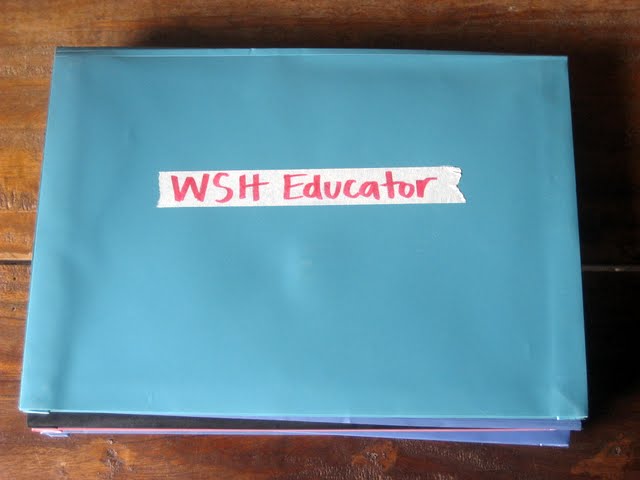 [Some of the folders we prepared.]
 [Arthur teaching about the use of rainwater.]
 [Abel teaching the CVCs about nutrition.]
Saturday, July 3, 2010
Power Outage in Mbarara
There's no power in all of Mbarara right now.
Last night, on the way back from dinner, we stopped by a supermarket because some girls wanted chocolate. Initially we thought it was closed because it was so dark (it was around 9:30 PM), but the power was just out. The girls were given candles inside the store and happily completed their shopping by candlelight.
We lost power at Tank Hill shortly before I went to bed last night, and I hope we get it back soon! My laptop battery is already running low, and I happen to like my weekend Glee sessions. At least it's now daylight so I no longer need to wear my headlamp!
P.S. We've had power outages 3-4 times already, but they usually only lasted a few hours. At least the water is still on (for now, at least)...
Last night, on the way back from dinner, we stopped by a supermarket because some girls wanted chocolate. Initially we thought it was closed because it was so dark (it was around 9:30 PM), but the power was just out. The girls were given candles inside the store and happily completed their shopping by candlelight.
We lost power at Tank Hill shortly before I went to bed last night, and I hope we get it back soon! My laptop battery is already running low, and I happen to like my weekend Glee sessions. At least it's now daylight so I no longer need to wear my headlamp!
P.S. We've had power outages 3-4 times already, but they usually only lasted a few hours. At least the water is still on (for now, at least)...
Birth and Death
I spent Friday morning at the Mbarara University of Science & Technology (MUST) visiting the antenatal, postnatal, gynecological, and labour wards. As part of our DE program, we're using four Friday mornings to alternate visits between two different hospitals--MUST, which is public and is usually extremely busy, and Mayanja Memorial Hospital (MMHF, our local partner, is the non-profit branch of MMH), which is private and has nicer facilities but fewer patients due to the higher cost.
We were first taken around to the different wards by an extremely informative first-year resident, who explained the types of patients admitted to each ward, common cases seen and complications encountered, and the challenges faced by the staff in dealing with patients (only having one operating theatre at MUST, for example). Afterward, we observed in the labour ward, where we witnessed a live delivery!
More from our visit:
-MUST handles 15-25 deliveries a day. Of those, 6-10 will be Caesareans, a higher number than I expected. However, there is also a huge fear of infections spreading in the postnatal ward. Because beds or cots are all kept together in one room 2-3 feet apart (no separated rooms), a woman who becomes septic is always placed in the back corner, while those newly out of surgery are kept at the front of the ward, as far away as possible. Sidenote: Those who visited MUST the first week saw some of the C-section wounds, and they all said it was not a pretty sight--large incisions and jagged stitches. MMH patients, we're told, fared better with neater handiwork. Yet another dichotomy between private and public facilities.
-The gynecology ward sees many complications from botched abortions. Abortions are illegal here, save for medical reasons, but many women don't want more children at all or specifically don't want girls. A perforated uterus is often just removed--it's easier to prevent infections this way than attempting to repair it.
-Some women actually want their tubes tied as a means of preventing future pregnancies, but since there's only one theatre, such operations are low on the priority list. Women frequently get pregnant again before they can have the procedure done.
-The last case we saw was a woman who had attempted an abortion at 24 weeks. The fetus had been decapitated (to try to remove the rest of the body from the woman), but the rest of the extraction had been unsuccessful and the woman had come to MUST. The resident told us he could feel bones sticking out of her cervix and that these abortions could also result in a perforated uterus if the rest of the body was not removed promptly. She was given pills to induce contractions and dilation and was then sent outside to wait for the drugs to take effect in approximately two hours.
It is heartbreaking to hear about and see some of these women who suffer so much. They often don't want any more children (on average, a Ugandan woman will bear 7 children), but husbands are often resistant to using condoms or other family planning methods, leading to these drastic measures.
We were first taken around to the different wards by an extremely informative first-year resident, who explained the types of patients admitted to each ward, common cases seen and complications encountered, and the challenges faced by the staff in dealing with patients (only having one operating theatre at MUST, for example). Afterward, we observed in the labour ward, where we witnessed a live delivery!
More from our visit:
-MUST handles 15-25 deliveries a day. Of those, 6-10 will be Caesareans, a higher number than I expected. However, there is also a huge fear of infections spreading in the postnatal ward. Because beds or cots are all kept together in one room 2-3 feet apart (no separated rooms), a woman who becomes septic is always placed in the back corner, while those newly out of surgery are kept at the front of the ward, as far away as possible. Sidenote: Those who visited MUST the first week saw some of the C-section wounds, and they all said it was not a pretty sight--large incisions and jagged stitches. MMH patients, we're told, fared better with neater handiwork. Yet another dichotomy between private and public facilities.
-The gynecology ward sees many complications from botched abortions. Abortions are illegal here, save for medical reasons, but many women don't want more children at all or specifically don't want girls. A perforated uterus is often just removed--it's easier to prevent infections this way than attempting to repair it.
-Some women actually want their tubes tied as a means of preventing future pregnancies, but since there's only one theatre, such operations are low on the priority list. Women frequently get pregnant again before they can have the procedure done.
-The last case we saw was a woman who had attempted an abortion at 24 weeks. The fetus had been decapitated (to try to remove the rest of the body from the woman), but the rest of the extraction had been unsuccessful and the woman had come to MUST. The resident told us he could feel bones sticking out of her cervix and that these abortions could also result in a perforated uterus if the rest of the body was not removed promptly. She was given pills to induce contractions and dilation and was then sent outside to wait for the drugs to take effect in approximately two hours.
It is heartbreaking to hear about and see some of these women who suffer so much. They often don't want any more children (on average, a Ugandan woman will bear 7 children), but husbands are often resistant to using condoms or other family planning methods, leading to these drastic measures.
Subscribe to:
Posts (Atom)
